
Ask your SEO specialist, digital agency, AI consultant — or your webmaster, if you still have one — one simple question:
Does the Digital World Know My Business as I Want It to Be Known?
Your business earns its reputation through what it actually does: the customers you serve, the problems you solve, the expertise you develop, the results you deliver, and the recognition you earn.
But does the digital world have enough real evidence to see the same business you see?
The Reputation Journey Framework, developed by Mauro Queiroz, explains how earned reputation is documented through evidence, how that evidence is transported into the digital environment, and how it contributes to Digital Reputation, Digital Recognition, and the possibility of recommendation.
You can't be recommended for what can't be recognized.

Why the Reputation Journey Framework Was Developed
Mauro Queiroz has worked through decades of technological change, from early personal computing to the Web, Search, social media, and now AI. Each new era brought innovation, new terminology, new specialists — and new confusion for businesses.
Today, companies are being told to understand SEO, AEO, GEO, SGEO, AI Search, and whatever acronym comes next. The Reputation Journey Framework was developed to focus instead on what does not change: do good work, earn a reputation, preserve the evidence, and make sure the digital world can recognize it.
The technology will keep changing. The need to be recognized for what you have genuinely earned will not.

The technology will keep changing, but the basic challenge will remain the same: businesses need a way to carry what they have earned in the real world into the digital world.
The Reputation Journey explains that process. It begins with real experience and results, turns them into evidence that can be discovered and understood, and ultimately helps people, Search, and AI recognize what a person or company should be known for.
The tools may change. The journey from earned reputation to recognition and recommendation does not.
1. Earned Reputation: It Starts With What You Actually Do
Reputation begins with reality. A company earns it through the products it makes, the customers it serves, the problems it solves, the expertise it develops, the promises it keeps, the people it employs, and the results it delivers over time.
A new website cannot create this reputation. Neither can SEO, advertising, social media, public relations, or AI. They can help communicate what a business has done, but the foundation must come from the business itself.
This is why the Reputation Journey does not begin by asking, “What do we want people to think about us?” It begins by asking, “What are we actually doing to deserve that reputation?”
A company does not need to be old to begin the journey. A business that opened this year may already be solving problems, satisfying customers, developing expertise, and doing things worth documenting.
The Reputation Journey starts with what you genuinely earn, not what you want the internet to believe.
2. Evidence: Record What Your Business Has Earned
Reputation happens every day, but evidence of it can easily disappear.
A successful project may be completed without becoming a case study. A customer may send an extraordinary message that is never preserved. An employee may develop valuable expertise that never appears on the company website. An award may hang on a wall for years while the digital world has no idea it was ever received.
Evidence can take many forms: photographs, reviews, testimonials, project records, research, awards, certifications, interviews, articles, videos, customer stories, professional achievements, media coverage, and documentation of the work itself.
The objective is not to manufacture proof. It is to record and preserve evidence of things that genuinely happened.
This changes an important business question. Instead of constantly asking, “What can we post this week?”, companies can begin asking:
What happened in our business this week that deserves to become part of our digital evidence?
The Reputation Gap: When Reality Gets Ahead of the Internet
This is where many businesses encounter a problem.
The people who run a company may know its history, expertise, achievements, and capabilities extremely well. Customers may know them too. But the digital world may have access to only a small part of that story.
The Reputation Gap is the divide between the reputation a person or company has genuinely earned and what the digital environment can actually discover, understand, verify, and evaluate about it.
It can happen to a 40-year-old company, but it can also happen to a business founded last year. Age is not the determining factor. The gap develops whenever earned reputation accumulates faster than evidence of that reputation is recorded, transported, and made understandable digitally.
The Reputation Gap begins when the reputation you have earned is greater than the reputation the digital world can see.
For established businesses, closing that gap may require recovering years of overlooked evidence. For new businesses, there is another opportunity: build the bridge while building the company.
3. Reputation Transportation: Build the Bridge
Recording evidence is not enough if that evidence remains hidden in folders, phones, archives, offices, or people’s memories.
Reputation Transportation is the process of capturing, digitizing, contextualizing, connecting, and distributing evidence of earned reputation so it can become discoverable and understandable in the digital environment.
A photograph alone may mean very little. A photograph connected to a project, date, company, customer story, professional achievement, or event becomes more meaningful. An award sitting on a wall may be visible to everyone who enters the room, but properly documented online, it can become part of the company’s digital history.
Websites, articles, executive profiles, case studies, social media, videos, interviews, reviews, media coverage, professional directories, and other digital sources can all become parts of this bridge.
The objective is not to be everywhere or publish endlessly. The objective is to make meaningful evidence travel.
Being online is not the same as transporting your reputation online.
4. Digital Reputation: What the Digital World Can See
As evidence crosses the bridge, it begins forming a more complete digital representation of the business.
This is Digital Reputation: the digital representation of the reputation you have earned.
It is not limited to what your own website says about you. Reviews, media coverage, customer discussions, professional profiles, interviews, citations, awards, associations, and other independent sources can all contribute to the picture.
That distinction matters because there are not two separate reputations — a real one and an artificial digital one. The digital environment is simply seeing a representation of the same business through the evidence available to it.
When important evidence is missing, that representation can be incomplete. When evidence is inaccurate, outdated, disconnected, or poorly explained, the picture can also become distorted.
The objective is therefore not to invent a better Digital Reputation. It is to help the digital representation become a more accurate reflection of what has genuinely been earned.
5. Digital Recognition: When Your Reputation Becomes Understandable Beyond You
Having information online does not mean the digital world recognizes your business for what it has earned.
Digital Recognition happens when people, Search, and AI can recognize what you are genuinely known for based on evidence of your work, experience, achievements, and results.
Your website, reviews, articles, interviews, awards, projects, media coverage, and professional profiles can work together to create a clearer picture of your business.
Being known means the digital world knows you exist. Being recognized means it understands what you are known for.
For a business owner, the question is simple:
Does the digital world recognize my business for what it has genuinely earned?
You cannot control what people, Search, or AI will say about your business. But with the right expertise, you can make real evidence of what you have earned clear, connected, and understandable.
6. Recommendation: Recognition Creates the Opportunity
People are increasingly asking digital systems questions that were once directed primarily to friends, colleagues, salespeople, or traditional search engines.
Which dentist should I consider? Which restaurant is good for seafood? Who is an experienced consultant in this field? Where should I buy professional garden tools? Which company has a strong reputation for this kind of work?
Before an AI system can recommend a business, it first needs to discover possible candidates and understand enough about them to evaluate their relevance to the question being asked.
Digital Recognition does not guarantee recommendation. Location, price, availability, customer needs, competition, relevance, reviews, context, and many other factors may influence an answer.
But there is a fundamental relationship between the two:
You can’t be recommended for what can’t be recognized.
The Reputation Journey Never Ends
Recommendation is not the end of the framework because reputation itself never stops changing.
Tomorrow, a customer may leave a new review. An employee may complete advanced training. A competitor may introduce something better and push your company to improve. You may launch a new product, complete an important project, receive an award, develop a new method, enter another market, or solve a problem you had never encountered before.
Every one of those events can create new evidence of what your business is becoming.
That is why Reputation Transportation is not a campaign and should not be confused with content frequency. A company can publish on Instagram every day and still leave important evidence undocumented. Another company may publish less frequently while reviews, media coverage, projects, customer experiences, and professional recognition continue strengthening its digital presence.
How Does the Digital World See Your Business?
Introducing
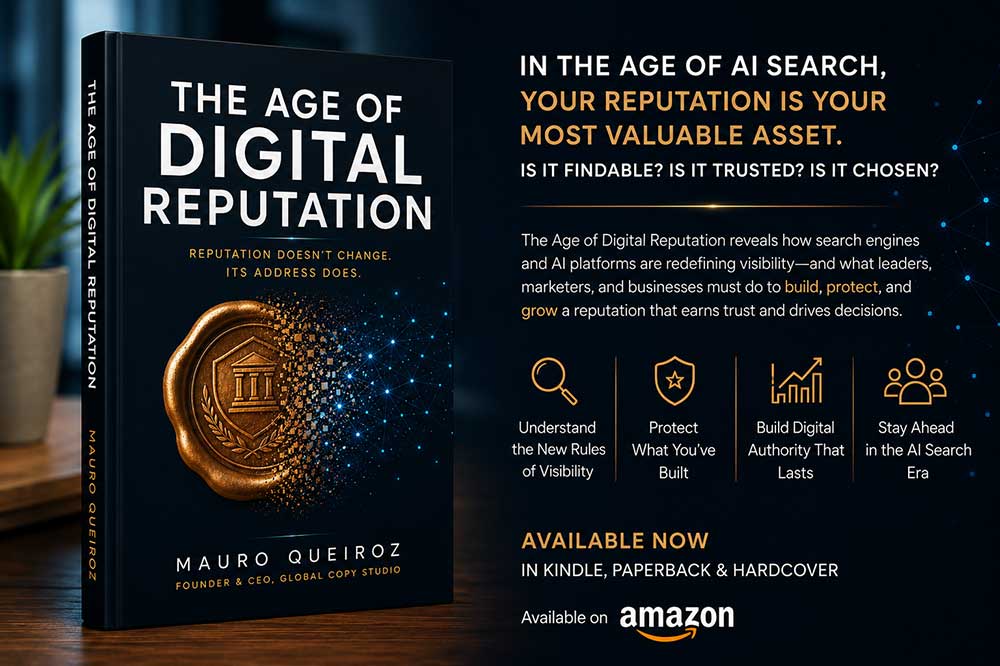
The Age of Digital Reputation
Why the Future Belongs to Businesses That Publish Expertise, Not More Content
The internet has changed. Your reputation hasn't lost its value—it has changed its address. Learn how to transform years of experience into discoverable digital evidence that people, search engines, and AI systems can find, understand, and evaluate.