

AT A GLANCE
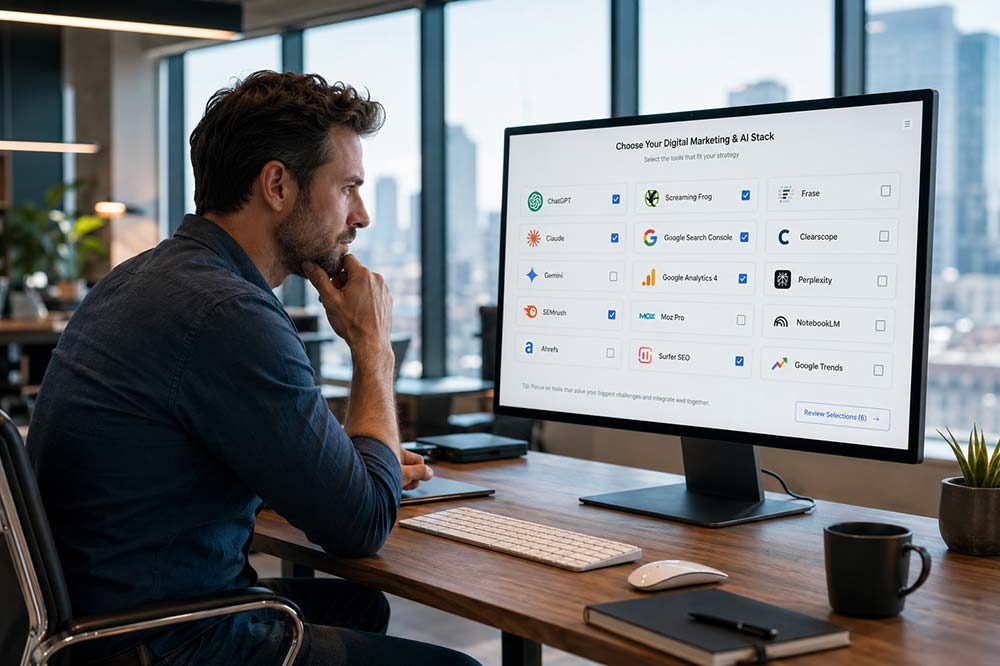
Semrush, Ahrefs, Claude, ChatGPT, and other digital tools can help a business research opportunities, analyze competitors, organize information, create content, and work faster. What they cannot do is create the experience, customer relationships, expertise, results, and recognition from which a genuine reputation is earned. The Software Trap begins when a company mistakes the tools used to communicate its reputation for the source of that reputation.
- AT A GLANCE
- The Software Gold Rush
- The Software Trap
- AI Search Makes the Difference More Important
- AEO and GEO Are Tools Too
- Software Can Find Opportunities. It Cannot Create Your Story.
- A Lesson From a Real Client
- Reputation Is Earned Before It Is Published
- Software Should Amplify Strategy, Not Become the Strategy
“People insist that building online reputation is about using tools to find the best keywords for their content. They forget that it is built through the real stories, experience, and knowledge a business creates every day.” — Mauro Queiroz
The Software Gold Rush
Artificial intelligence has changed how people find and consume information. Instead of typing a few keywords into Google and visiting several websites, people can now ask ChatGPT, Gemini, Claude, Perplexity, or Google a detailed question and receive information directly within the search or conversational experience.
That change has created an understandable reaction in the business world. Companies are buying SEO platforms, AI writing tools, research software, automation systems, and every new application promising greater productivity or visibility. When traffic declines or competitors appear more frequently in search and AI-generated answers, buying another tool can feel like an obvious solution.
There is nothing wrong with investing in professional software. I use many of these tools myself. The problem begins when businesses confuse better tools with a better reputation.
The Software Trap
I call this misunderstanding the Software Trap. It happens when a useful tool becomes confused with the experience, knowledge, evidence, and judgment the tool is supposed to help uncover or communicate.
The Software Trap is the belief that software can create reputation when, in reality, it only amplifies the reputation your business has already earned.
Think about a professional photographer. Give two people exactly the same camera and they will not necessarily produce the same photograph. One may have spent twenty years learning about light, composition, timing, people, and storytelling. The other may simply own excellent equipment.
The camera can extend what the photographer is capable of doing, but it cannot provide those twenty years of experience. Digital tools work in much the same way. Semrush can reveal search opportunities, Ahrefs can help analyze links and competitors, and Claude or other AI systems can help research, organize, analyze, and develop information. None of them can manufacture the history behind your business.

AI Search Makes the Difference More Important
For many years, digital marketing concentrated heavily on ranking well in Google. Businesses invested in SEO because stronger search visibility could bring more visitors, enquiries, and customers. That objective has not disappeared, but the discovery environment around it is expanding.
People can now encounter information through AI Overviews and conversational AI systems before visiting a company’s website. As a result, businesses need to think not only about whether a page can rank, but whether useful information about the company, its people, its expertise, and what it has actually done exists in forms that can be discovered and understood.
This broader challenge is part of AI Search Optimization →. The objective is not to optimize for one particular chatbot or guarantee that an AI system will recommend your company. It is to build a digital presence that search and AI systems can discover, understand, and evaluate.
AEO and GEO Are Tools Too
AEO, or Answer Engine Optimization, encourages businesses to make important answers clear and accessible. GEO, or Generative Engine Optimization, considers how information is presented in environments where generative systems may discover, interpret, summarize, or use information from digital sources.
These approaches do not replace SEO, and none of them creates expertise. They help businesses think about how information needs to work in a changing Web environment. This is why I use the broader idea of Web Content Optimization (WCO) →: SEO, AEO, GEO, AI Search, and future acronyms may change, but businesses will continue adapting information to the Web environment of their time.
Software Can Find Opportunities. It Cannot Create Your Story.
Imagine that two competing companies subscribe to exactly the same SEO platform. Both can research the same keywords, examine similar competitors, identify similar questions, and receive similar recommendations. Now give both companies access to the same AI system. Both can generate outlines, summarize research, analyze documents, and produce text faster than before.
What still separates them? Their businesses. One may have twenty years of customer relationships, unusual projects, proprietary knowledge, specialist employees, original research, difficult lessons, industry recognition, and hundreds of experiences worth documenting. The other may have a completely different history.
The software is available to everyone. Your experience isn’t. That is why the competitive question is increasingly not simply which tools your marketing team uses, but what genuine knowledge and evidence those tools are helping you bring into the digital world.
A Lesson From a Real Client
One of our fashion industry clients faced declining organic traffic while the search environment around the business was changing. We recommended putting greater emphasis on the company’s genuine experience, specialist knowledge, and original information instead of relying primarily on producing more keyword-targeted content.
The company chose to expand its internal SEO operation, invest heavily in software, and increase content production. From the outside, the strategy looked sophisticated. Dashboards improved, reporting became more detailed, and the company could produce considerably more content.
The weakness was not the software. The tools were doing exactly what they had been purchased to do. The problem was that much of the resulting content did little to communicate what made the company genuinely different. Its real-world experience was considerably richer than the digital evidence being created around it.
Traffic and rankings later continued to face pressure, but that experience should not be reduced to a claim that software caused the decline. The more useful lesson was strategic: better tools could not compensate for the failure to turn distinctive business experience into distinctive digital evidence.
Reputation Is Earned Before It Is Published
One of the biggest misconceptions in digital marketing is that reputation begins when someone publishes an article, optimizes a website, earns a backlink, or opens a social profile. It doesn’t. Reputation begins in the business itself: in customer meetings, difficult projects, product improvements, promises kept, problems solved, mistakes that produce lessons, and years of accumulated professional experience.
Those experiences can later become articles, case studies, interviews, research, customer reviews, independent coverage, professional profiles, videos, public records, and other forms of evidence. Together, these sources can contribute to a Digital Reputation → that more accurately represents what the business has genuinely earned.
Software can help identify, organize, analyze, optimize, and communicate that information. AI can help a specialist turn an hour-long conversation into a structured draft. SEO tools can reveal questions customers are asking. Analytics can show what audiences find useful. But the raw material still has to come from somewhere real.
Software Should Amplify Strategy, Not Become the Strategy
The businesses best prepared for the next stage of digital discovery will not necessarily be those with the largest software budgets or the longest lists of subscriptions. They will be the companies that understand what their tools are actually for and combine them with something software cannot provide: genuine business experience.
Semrush, Ahrefs, Claude, ChatGPT, and whatever comes next can be extraordinarily useful. Use them to research, analyze, organize, accelerate, test, and communicate. Just don’t ask them to manufacture the reason your company deserves to be recognized.
Your software is not your reputation. Your business creates the reputation. The software should help the digital world see it.


